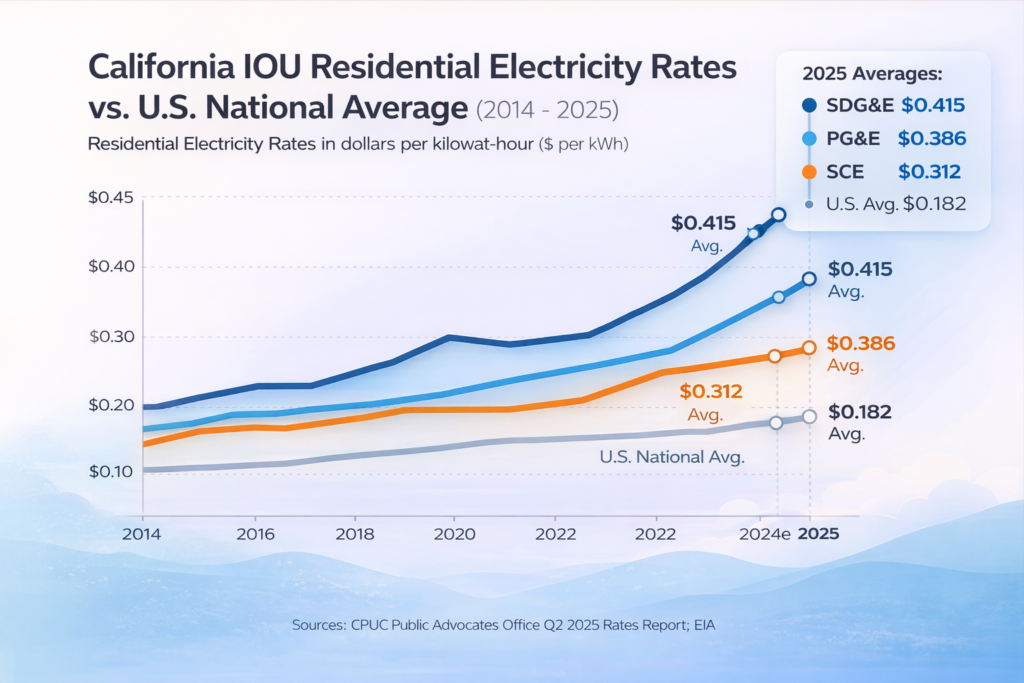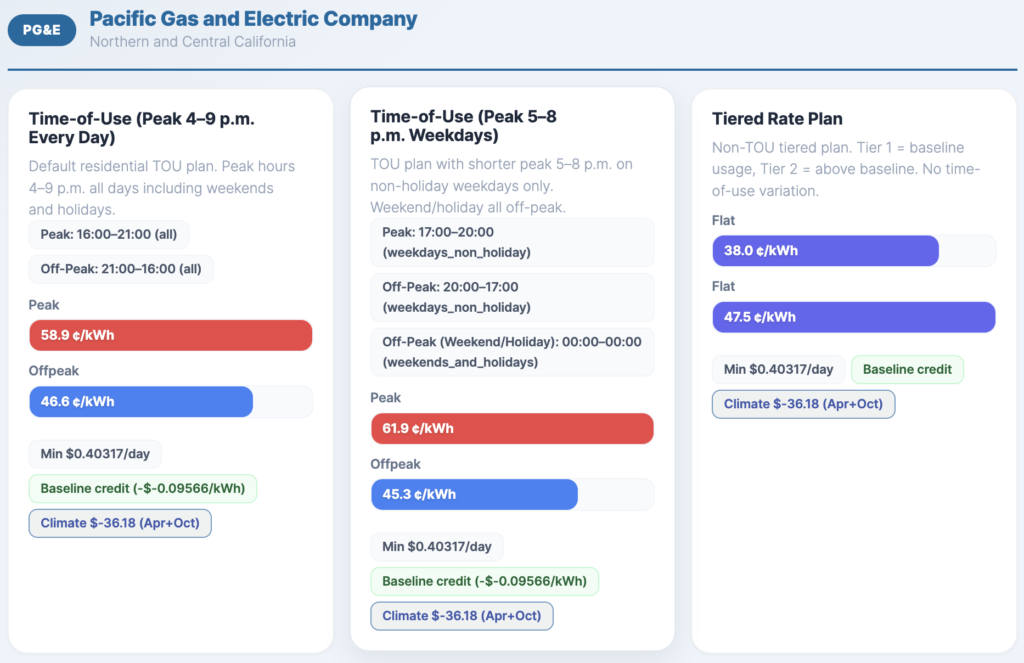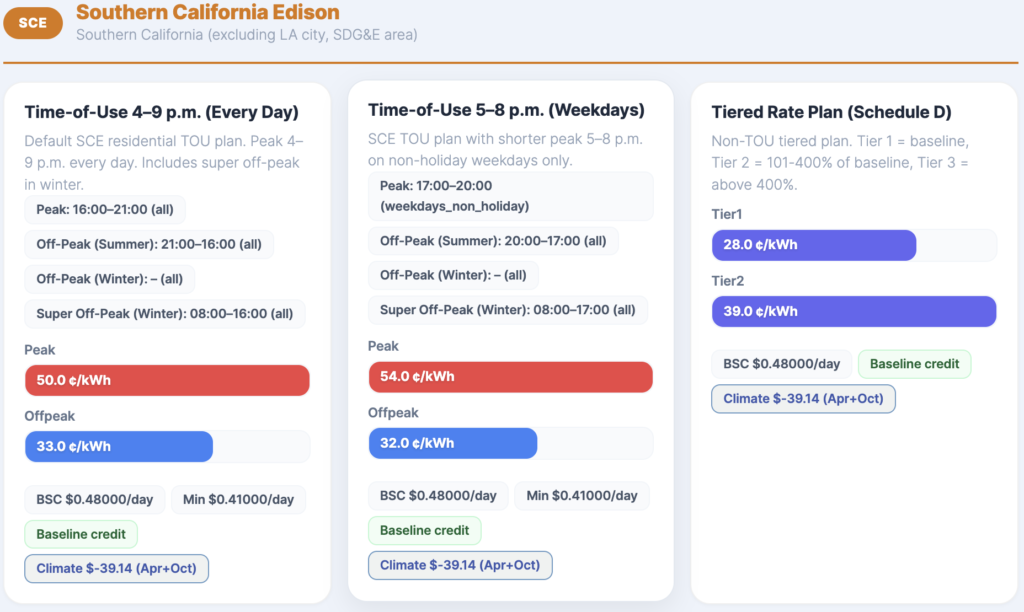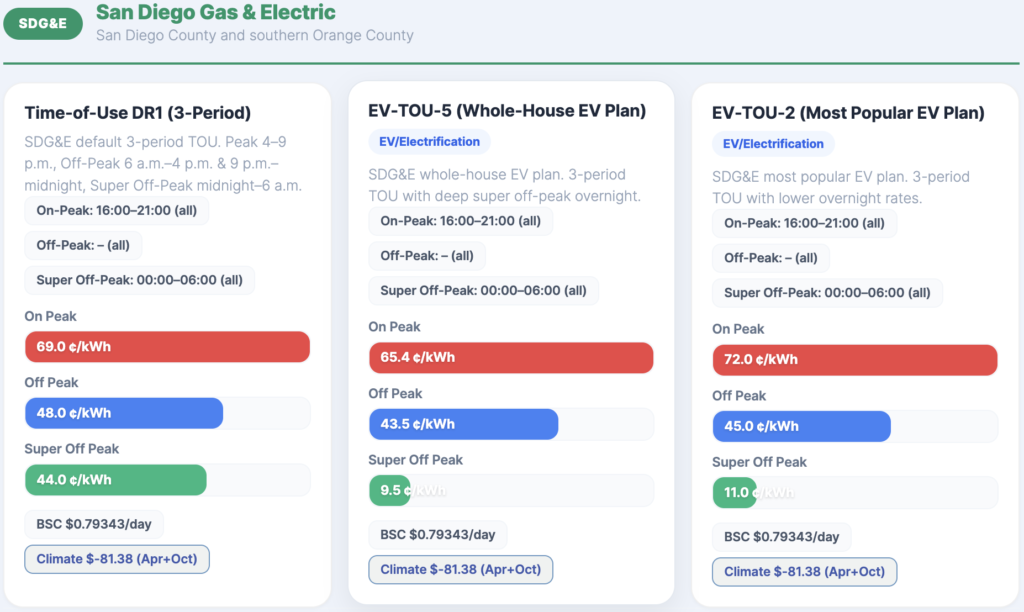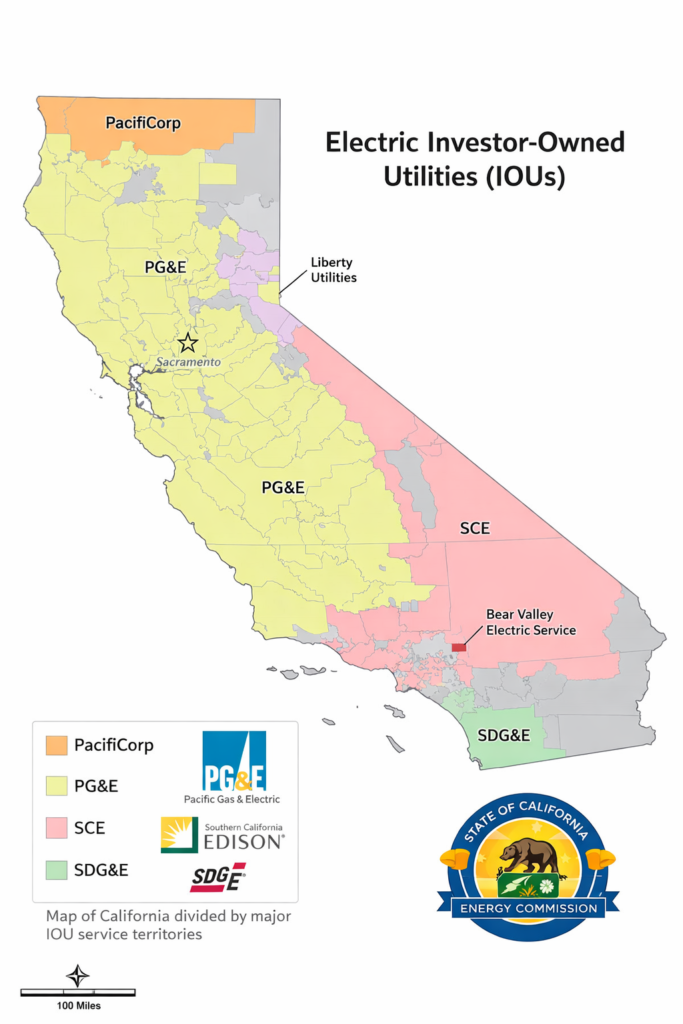
If you live in California and receive electricity from:
- Pacific Gas and Electric Company
- Southern California Edison
- San Diego Gas & Electric
you may have also seen something else on your bill:
Community Choice Aggregation (CCA)
Many homeowners ask:
- What is a CCA?
- Is CCA cheaper than PG&E?
- Can I opt out?
- Does it affect reliability?
This guide explains exactly how CCAs work in California in 2026.
1️⃣ What Is a CCA?
A Community Choice Aggregator (CCA) is a local government program that purchases electricity on behalf of residents and businesses.
Important:
- The utility (PG&E, SCE, SDG&E) still owns and maintains the poles and wires.
- The CCA only replaces the generation portion of your bill.
- Delivery and infrastructure remain with the original utility.
CCAs were authorized under California law to give cities and counties more control over energy sourcing and pricing.
2️⃣ How Your Electricity Bill Is Structured
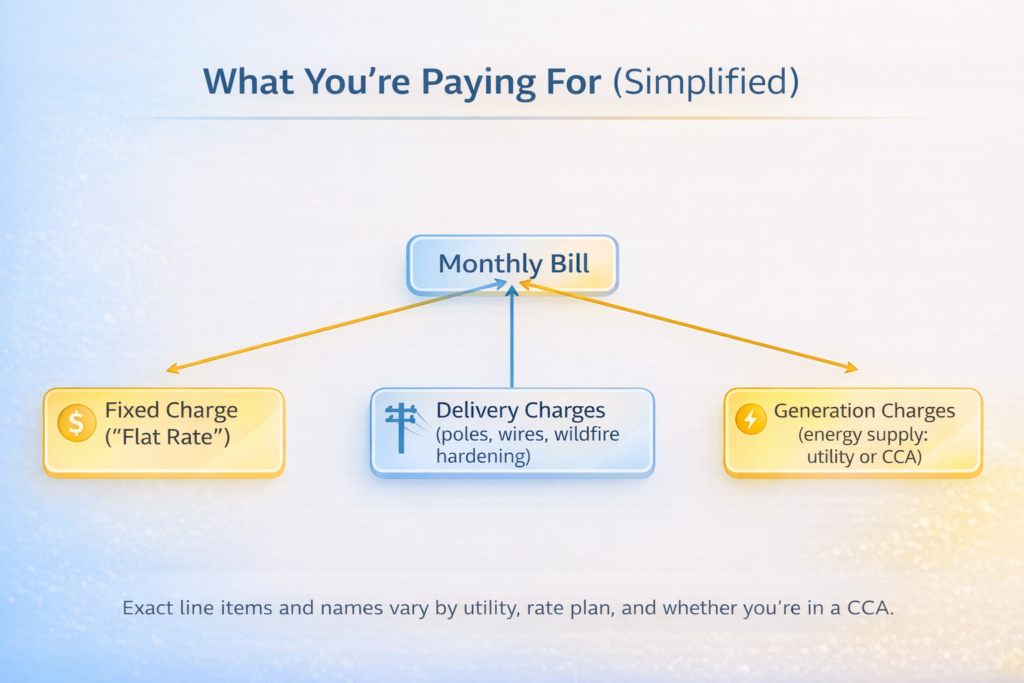
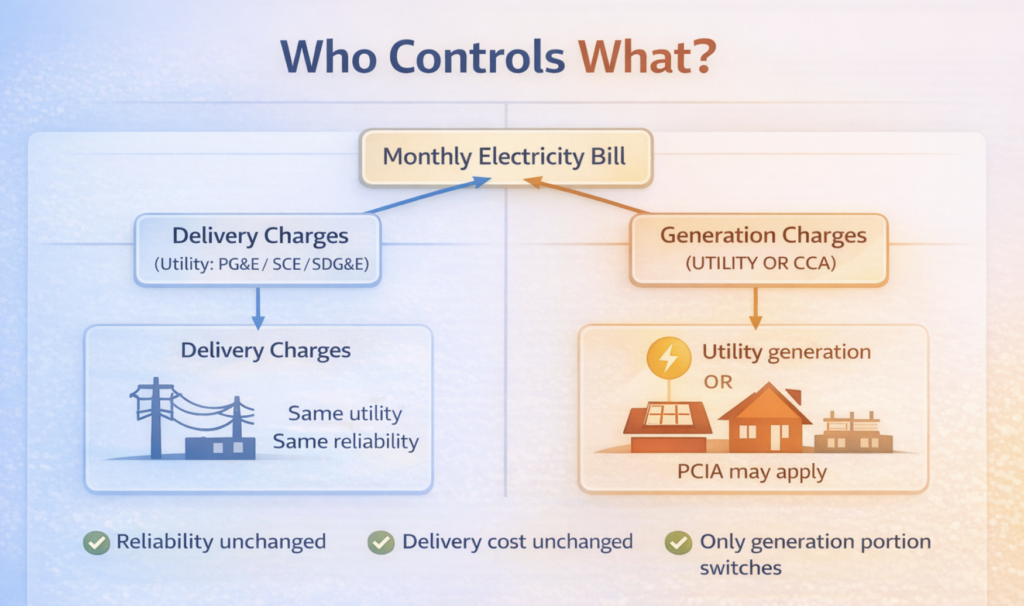
Your electricity bill has two main parts:
| Component | Who Controls It? | What It Covers |
|---|---|---|
| Delivery | Utility (PG&E, SCE, SDG&E) | Poles, wires, grid maintenance |
| Generation | Utility or CCA | The electricity itself |
When you enroll in a CCA:
- Delivery charges stay the same.
- Only generation pricing changes.
- Reliability remains unchanged.
Power outages are still handled by your utility.
3️⃣ Why Do CCAs Exist?
CCAs were created to:
- Increase renewable energy adoption
- Provide local control over energy sourcing
- Offer competitive generation pricing
- Accelerate clean energy goals
Examples of CCAs in California:
- San José Clean Energy
- CleanPowerSF
- Silicon Valley Clean Energy
Each serves specific cities or counties.
4️⃣ Is CCA Cheaper Than PG&E?
It depends on:
- Your usage
- Your rate plan
- Current Power Charge Indifference Adjustment (PCIA)
- The CCA pricing structure
Simplified Example
| Scenario | Utility Generation | CCA Generation |
|---|---|---|
| Rate per kWh | $0.17 | $0.15 |
| PCIA Fee | — | +$0.03 |
| Effective Cost | $0.17 | $0.18 |
Even if the base CCA rate is lower, the PCIA fee can offset the savings.
What Is PCIA?
The Power Charge Indifference Adjustment (PCIA) is a fee charged to CCA customers to cover long-term power contracts signed by the utility before you left.
It is regulated by the California Public Utilities Commission.
5️⃣ Does CCA Affect Solar (NEM 3.0)?
If you have rooftop solar under NEM 3.0:
- Export credits are determined by your generation provider (CCA or IOU).
- Rates may differ slightly.
- Settlement schedules may vary.
However:
- Delivery structure remains identical.
- Interconnection remains through the utility.
Solar customers should compare export credit schedules carefully.
6️⃣ Does CCA Affect Reliability?
No.
- Same poles and wires.
- Same outage response.
- Same service crews.
- Same billing platform (usually).
If the power goes out, you still call your utility.
7️⃣ Renewable Energy Comparison
Many CCAs offer higher renewable percentages.
| Provider | Standard Plan Renewable % |
|---|---|
| PG&E (default mix) | ~33–40% |
| Many CCAs | 50–100% options |
Some CCAs provide:
- 100% renewable premium plans
- Local solar investments
- Community storage projects
Pricing may vary based on renewable tier.
8️⃣ Can You Opt Out?
Yes.
CCA enrollment is typically:
- Automatic if you live in a participating city
- Opt-out within a designated window
- Possible to return to the utility (may include waiting period)
Check your local CCA rules before switching.
9️⃣ When CCA Makes Sense
CCA may be beneficial if:
- You want higher renewable content.
- The effective generation rate is lower after PCIA.
- You prefer local energy governance.
It may not make sense if:
- PCIA charges eliminate savings.
- You prefer stability of utility pricing.
- Your usage pattern doesn’t benefit from the plan.